MEDIART
  • Home
  • About
  • BLOG
  • Praxis Greece
  • Contact
  • Home
  • About
  • BLOG
  • Praxis Greece
  • Contact
  MEDIART

​​MEDIART

2025

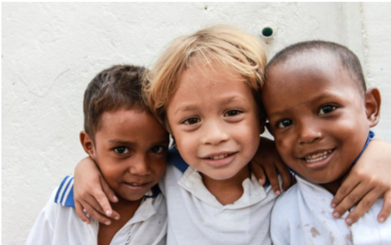
Children are not colorblind

30/3/2022

Comments

 
We are faced with racism from young on.
For me, it began in my child’s room with the colors of my barbies and dolls, which were all white. Later on, we often used to play the game 
“Who is afraid of the black man?”,  our “skin color pencil” was only light pink, we sang racist songs[1], ate “N-word kisses” and thought it was entirely normal. Until we grew up and realized how racism tiptoed throughout our entire childhood.

When a young child first brings up the differences between skin tones, it's relatively easy to talk about. The issue of racism is understandably more difficult to explain. I am sure that only a few parents consider themselves or their children to be racist, since they do not intentionally treat people of different ethnic groups badly or think badly of them.

Nowadays, we see that there are improvements in terms of selling black dolls and having black people portrayed in children's books and movies, but it is still not enough. It is not going to be enough if there are still people getting choked to death because of their skin color. It is not going to be enough if black football players are being reduced to their skin color and it is not going to be enough when people are gathered calmly in a bar and shot to death because of their heritage. Even in times of a war in the Ukraine, there are people being rejected to flee from the country yet again just because of their skin color.

​“It is not our differences that divide us. It is our inability to recognize, accept, and celebrate those differences.” 
- Audre Lorde


[1] For instance the song “All children learn to read, even native Americans and Chinese”
Picture
NIKOL DONTSCHEW
Nikol is a German volunteer involved in the International Day for the Elimination of Racial Discrimination
Comments

Changing our habits

28/3/2022

Comments

 
Mallorca doesn’t have enough water. No surprise we knew this for a long time. But the situation is gradually getting worse. Why?

Well, 100 years ago, the water was already short but there were only a few people living on the island and they were mindful with deciding for what to use water.

By today, tourism, an agricultural boom and strong urban growth is using up huge amounts of water. Also climate change with its unpredictable drouths and sudden floods is leading to a situation where the three water sources cannot supply enough water anymore.

Plus every one of these sources has a problem: reservoirs are dependent on enough rain, seawater desalination plants are environmentally harmful and deep wells for extracting groundwater only work up to a certain point- if you dig to deep the seawater starts getting in.

No, just working on getting more water won’t work – we have to change the habit of using too much water. 

Why for example do you need to water golf courses and gardens to keep them green? 

Easy, you don’t. You can just use plants native to Mallorca that don’t use that much water and maybe just not play golf.

There are many ways how you can be more mindful of the water you spend, it does not need to spend less water at home. Being mindful of water can also mean buying less clothes or consuming more regional products.

The point is that we need to act now and stop taking water for granted. Otherwise, many more regions will struggle with the same issues as Mallorca. 

We decide how our world will look.
JULIA FÉAUX DE LACROIX
Julia is a German Volunteer involved in the World Water Day.
Comments

Down syndrome: Retarded or ahead?

24/3/2022

Comments

 
Down syndrome is a genetic disorder caused when abnormal cell division results in an extra full or partial copy of chromosome 21. This extra chromosome changes how a baby’s body and brain develop, leading to mildly-to-moderately low IQ and widely known characteristic such as flattened face, almond-shaped eyes that slant up, short neck, small ears, palmar crease, poor muscle tone and short height.

​So down syndrome people have always been considered as “retarded”, finding references about them in arts, literature and science. However, despite their difficulties, the truth is that they are as capable as the rest of the world to achieve their dreams.

Examples of this are Jamie Brewer, who debuted as an actress in the television series “American Horror Story” an became the first model with Down syndrome to participate in the catwalk of Fashion Week in New York. Pablo Pineda, young man from Malaga, first European graduate with Down Syndrome, as well as a university teacher, presenter, writer and award-winning actor. Owen Groesser, player who gives name to the well-known 'Owen Play'. Gloria Ramos, the first actress with intellectual disability nominated for the Goya Awards in the category of 'Best New Actress'. Bárbara Wetzel, who won in 2015 the World Artistic Gymnastics Championships in the Junior category and in 2018 the 'All Around'. Lauren Potter, actress that plays the character of cheerleader Becky Jackson in the teen series 'Glee', appointed by Barack Obama to the Presidential Committee for People with Intellectual Disability. Ayelén Barreiro, dance talent, who achieved fame in 'Bailando por un sueño' in Argentina. Chris Burke, actor with two Golden Globe nominations. And finally, Marian Ávila, first Spanish woman with Down syndrome to parade during New York Fashion Week.

Moreover, I not only think that they are as capable as everyone, but they should be an inspiration for the world, because having personal and society’s setbacks they are succeeding sometimes more than many people in following their dreams and living a happy life.
LAURA SOLANA LOPÉZ
Laura is a Spanish volunteer involved in the World Down Syndrome Day.
Comments

poetry as art in our life

22/3/2022

Comments

 
The World Poetry Day is celebrated since 1999 on the 21st of March. Although at first it might seem to some people like an unnecessary day to celebrate but Poetry is key in our society. Not only is it a pillar of culture worldwide, it's also a very present part in our lives directly and indirectly.

Looking at the past poetry was seen as more than just an art, it was almost like a sport. People would get together to hear poets freestyle, good wordplay was as important as a good football match is nowadays. On our daily lives poetry has lost this importance but we still regard it as one of the purest arts and a very particular branch of culture since poetry is different in every country, with different styles and obviously different languages leading to a lot of diversity. But now let's imagine a day with no poetry.

It might seem easy and to many of you it might even sound like a regular day. Well I'm challenging you to think again and think harder, poetry is more present than it might seem. Although it's not a requirement, most of the music we listen to is an interpretation of poetry. Lyrics are poetry. But we could all go through a day without music, regardless of how awful that does sound. So let's take it a step further, let's think of how poetry is indirectly involved in our lives. One thing poetry has been key in since its genesis is at developing different types of figures of speech like metaphors or anaphors. Therefore it's fair to assume that in a universe where poetry doesn't exist, figures of speech would be barely existing. A world without figures of speech is a world incapable of appreciating beauty, a world unaware of what is missing on but an unhappy world. A world where love would be displayed in shades of grey.

I don't wish to live in that world, therefore I'll continue to read poetry, I'll write sometimes, and I'll never forget how important it is to each and every human being on earth.
AFONSO GUIMARÃES
Afonso is a Portuguese volunteer involved in the World Poetry Day.
Comments

FORESTS – A KEY ELEMENT FOR HUMAN EXISTENCE

18/3/2022

Comments

 
​Forests play a fundamental role in humans' lives. Nevertheless, indicators show that flora has been experiencing a fast deterioration over the years and its ability to provide sustainable and stable supplies have been reduced as a consequence of the impact of human activities.
 
Its destruction and damage have been happening at an unprecedented rate. Especially with the outburst of consumption, global trade, human population growth, and urbanisation in the last half-century, our ecological footprint exceeded at least 56% of the Earth's rate of regeneration. In addition to that, the intensification of pollution and consequent habitats' change and injury have significantly endangered 80% of forests.
 
Environmental conditions are changing rapidly and also our vulnerability to climate-induced weather extreme threats particularly heat waves, floods, droughts, and tropical storms.
 
In 2009, alongside the uncommon record high temperatures and low rainfall, excessive logging and lack of effective forest management might have been at the root of drier thus highly flammable vegetation that might have exacerbated Australia's bushfire season. With over 10 million people exposed to thick smoke and more than 10 million hectares burned, this was one of the most intense fires ever recorded.
 
Moreover, excessive logging and deforestation can also be the reason of intensive flooding. Vast and densely sprouted vegetation in an area can counteract the impact of downpours. That is because without these natural drainage networks, excessive water cannot be contained or absorbed and so it usually leads to natural disasters of various forms like flooding.
 
These and other natural disasters can be in the origin of displacements, repercussions at the nutritional level, or even diseases since they change the circumstances of our lives. 
 
Therefore, reforestation in the context of climate change is one of the most important foundations of sustainable forest management. Because of the urgent requirement in productive forests that can, besides mitigating the evidences aforementioned, bind excess atmospheric carbon dioxide and offer renewable raw material for many applications, replacing plastics and other fossil-based products, successful forest regeneration is more critical than ever.
 
It is essential to find ways to mitigate the negative impacts of forest reduction in order to preserve human well-being or even survival.
MARCEL GUTENBERGER
​Marcel is a German volunteer involved in the International Day of Forests.
Comments

Save the forests at the click of a button

17/3/2022

Comments

 
Twenty two trees are necessary to provide oxygen to only one person. So, it could be said that humans depend on vegetation to survive. Most of the vegetation, and biodiversity itself, are found in the forests. The Figures from the Food and Agriculture Organization of the United Nations (FAO) are unequivocal regarding deforestation. Between 2000 and 2010, the world lost 13 million hectares of forests annually. Or to understand it better, a surface area similar to that of Costa Rica. And this is one of the reasons which the UN proclaimed on 21 March the International Day of Forests in 2012.

Raising awareness of the importance of all types of forests is important nowadays if everyone wants to improve deforestation. Fortunately, countries are more aware about this problem, and there are more events, activities or projects from local to international, involving planting trees as one of the many actions everyone can do. In fact, maybe people do not know if they search on the internet, they can also help in this issue. This is because Ecosia is a search engine as an alternative to other browsers to allocate a high percentage of the search ads to plant trees.

So yes, currently everyone can plant a tree from their own houses through a computer or anywhere with their smartphone. According to Ecosia, 80% of the search engine's advertising revenue is donated to planting trees. In addition, their benefits are used to do it in the places where they need it most. Some examples of the countries where they receive the benefits are Peru, Uganda, Nicaragua or Brasil. The platform has achieved the goal to plant more 143 millions of trees in 30 different countries at the click of a button.

Ecosia collaborates to take care of the environment through recovering vegetation in places where there is deforestation. People can search on the internet through this platform how to cook bougatsa, and at the same time they help in local places where they suffer deforestation. Planting a tree also is fundamental to preserve animals at risk of extinction, to keep agriculture alive or mitigate the effect of climate change. Only 45 searches are enough per person to plant a new tree. Now, the website still finds new users who would like to help in this project. Only at the click of a button, many things can be changed.
RAMÓN PÉREZ
Ramón is a Spanish volunteer involved in the International Day of Forests.
Comments

VOILÀ! FRENCH ON TOP OF THE WORLD

15/3/2022

Comments

 
The French language is one of the most important and spoken languages around the world. In fact, everyone can find this language in the five continents. Canada, Mali, Vanuatu, Lebanon or Belgium are some examples of countries where French is spoken. The UN started to celebrate French Language Day on 20 March of 2010, and now everyone celebrates this international day every year. Nowadays, there are more people who are interested in learning this romance language. What is the motivation to learn French?

If someone is interested to look at the top 10 of the languages most spoken, they could find the French language like the fifth. This information transmits interest to people who want to get by the language in another country. In addition, French is an official language in 32 countries and is the mother tongue of 80 million people. As a consequence, many businesses need people who speak French or they have presence in countries where they speak this language. So, learning this language is also a great idea to have more opportunities to find a job.

French is a language with a lot of history and culture. Over the course of the centuries, France stands out in areas such as literature, art or gastronomy. It is difficult to know someone who doesn't know Julio Verne, Molière or Monet or who hasn't ever eaten crepes or croissants. Everyone knows something about French culture and maybe they are not aware about it. French became the most important language internationally and it was used in diplomacy. As a consequence, their current importance in international organizations like the UN, EU or IMF.

It is very interesting to know that not only learning French but also other languages can change the vision of a person to see the world. So, French is worth it because it can be a language in which a person can discover a different way to live their life. English is usually the first language we learn after our mother tongue, however French would be the perfect language to be trilingual. In a few words, the French language can help you to grow up personally, to be aware about different cultures and to have more laboral opportunities in other countries. And if you consider this moment to start learning French?
RAMÓN PÉREZ
Ramón is a Spanish volunteer involved in the French Language Day.
Comments

Being a mother and a wife before being woman...

11/3/2022

Comments

 
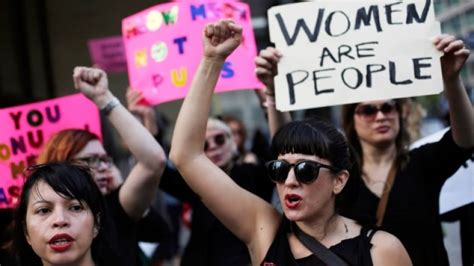
On the 8 of March is the International Women's Day, or more precisely the International Day for Women's Rights. It's not a day to celebrate women, it's a day to raise the awareness of the inequalities still very important between men and women. It's a day for women to demonstrate, united all together, their angriness, their willingness to fight against the patriarchal society.

Many women have integrated unconsciously that they need to take care of their household, their family: they are subjected to a mental load that men don’t have knowledge of. They are in charge of the childcare, they go to pick up their children at school, they think about what make for dinner, they cook, they clean for the family, they are going groceries shopping... Indeed, women still take on most of the unpaid care work at home, whether they are employed or not. According to the Beijing Platform for Action report, 92% of EU women are regular carers-several days a week, while 68% of men provide unpaid care work with this frequency.

Besides that, the unpaid and invisible work that women do is viewed as unproductive and “not working”. But why? Because they don’t earn money by taking care of the household? And according to today’s society, not earning money means being useless for the society.

Most of the time, women don’t have the opportunity to have an important professional life because people would blame them to not be good mothers or good wives. However, a woman shouldn’t be seen as a mom or a wife at first, she should be seen as her own person. Moreover, as you probably know not every woman dreams of having a settled family in a big house. Therefore, one of the first things to get rid of this social issue is to create father leaves as long as the mother ones, to not imply that the woman should take care of the household. And instead of educating girls as they should be caring, discreet or elegant, we should try the gender-neutral education (if you want to know more about this topic, here is the link you should click on: http://evs-mediart.weebly.com/blog/gender-neutral-education-a-dream).

The International Women's Day is just a day, once a year, to remember the necessity to fight, EVERY DAY, ALL TOGETHER, against gender inequalities and stereotypes omnipresent in our society. Women of the world, unite and fight for your rights!
Picture
​CÉLIA DOMEN
Célia is a French volunteer involved in the International Women's Day​.
Comments

Women in Programming

9/3/2022

Comments

 
When I think of the typical programmer I think of a nerd who is spending all night on his computer and who is always one thing: male.

We all know Mark Zuckerberg but have you ever heard of Ada Lovelace?

Her story dates back to the 19th century, to the first computer.
Ada was born in 1815 and privately tutored in mathematics on request of her mother. Later she continued her studies on her own but corresponded with Charles Babbage who was in the process of inventing the “Analytical Engine” which is widely known as the first computer.

She took an interest in this machine and in 1843 translated a French article about it. She added her own notes to the translation so the document grew from about 8000 to about 20000 words. In these notes she explained how to program the machine for calculating Bernoulli numbers and also expressed, for the time, visionary thoughts, such as: '(the engine) might act upon other things besides number... the Engine might compose elaborate and scientific pieces of music of any degree of complexity or extent' which we now know became true. For this reason Ada Lovelace can be called the first programmer.

Roughly one century after Ava Lovelace, Grace Murray Hopper was born in 1906. She studied mathematics and mathematical physics at Yale University and received her Ph.D. in 1034. Afterwards she joined the military and got assigned to a computing project where she worked on Mark I, the first large-scale automatic calculator. One of her biggest accomplishments was probably designing the first compiler[1] that understood English and was ergo much easier to use for non-programmers.

​The path of these two women was much harder than the path of Charles Baggage, Steve Jobs or Mark Zuckerberg: Their talents were not supported but instead they were told that what they are doing was not “lady-like” and that men are naturally superior anyways - so why even try?

Nevertheless, they reached their goals. Never mind, people laughing at them and putting obstacles in their way.

But still, we don’t learn about them in schools, they are not part of our general knowledge.

Now some might say: Why does this matter? It’s history, it is already gone.

But our perception of history shapes our present. Why should girls be interested in science if they believe that this is something reserved for boys, something where they will fail anyways? And if you are not interested in something, you won’t practice it as much and if you don’t practice it as much, you will probably not be good at it.

According to a global study from 2021 only 5% of programmers are women.

At least a part of this imbalance is due to the image of the typical programmer that we still have in our head. And the only way to get rid of it, is to start telling the story of programming (but also of other professions) in a different way and shining a light of the accomplishments of women.

Programming is one of the most needed jobs in the world and its importance will even increase in the following years. We can not afford to loose the potential that lies in girls all over the world.

Representation matters. Depicting history accurately matters.

[1] Device that translates the programmer‘s orders into computer code
JULIA FÉAUX DE LACROIX
Julia is a German Volunteer involved in the International Women's Day.
Comments

Living in a sexist society. Was it always like that?

7/3/2022

Comments

 
There is no society in the world that can claim to be free of sexism. 
Humankind has achieved unbelievable advances yet still has to fight a lot of times for basic human rights. Like women’s rights.
So, we are in 2022 and the world keeps being amazingly sexist. And I wonder, was it like this all along? And if so, is there a reason for why our society evolved this way? Does it have an origin?

​Let’s start by defining sexism. Sexism according to Cambridge is referred to actions based on the belief that the members of one sex are less intelligent, able, skilful, etc. than the members of the other sex. Especially that women are less able than men.

But where does this belief come from? Patriarchy has been the norm in almost all agricultural and industrial societies and has tenaciously resisted political changes, social revolutions and economic transformations. And the biggest shock for me came when I discovered that even Neanderthals divided tasks by sex.
Seriously? That old is sexism?

Anyway, so we don’t precisely know the origin of sexism but sadly it looks like it has always been present in the history of humankind. About the reason why it exists, I found out 3 theories proposed by the Israeli historian Yuval Noah Harari.

The first one hypothesises that men have subdued women because they are physically stronger. However, this is a half-truth (it is only true talking about averages and also women are more resistant to pain or disease). Moreover, social power does not usually depend on physical strength. Neither kings nor generals nor priests have reached their positions along history by their musculature.

The second hypothesis say men are prone to violence. This is a variation from the first hypothesis where the key is not the strength but the aggressiveness. Well, it could make sense since the vast majority of those convicted of violent crimes worldwide are male. However, in general, wars are won by strategists, not by brutes, a role that could be very well carried out by women.

And the last hypothesis is based on genetics. It suggests that men and women developed different survival and reproduction strategies. This reminds me of the sexual selection proposed by Darwin. Back then, he already proposed that men who managed to have offspring were the most ambitious and competitive; dynamic that made women become dependent, by propitiating the offspring of those who gave the profile of "submissive caregivers". Nevertheless, there are also some objections to this hypothesis. Given that in nature there are some species like elephants and bonobos, with a matriarchal society in which females create very effective cooperation networks against more individualistic males.

Either way, the fact is that sexism exists since the beginning of humankind and women have been fighting for their rights ever since.

From women like Agnodice, considered one of the first gynaecologist, who bravely practiced medicine in Greece (400 b.C) when women faced the death penalty for doing so. To Sister Juana Inés de la Cruz, who memorably defended women's right to education in 1691 by proclaiming "you may well philosophize and season dinner.". Anna Filosofova, co-founder in 1860 of a society that offered support to poor people, not only in the form of affordable housing, but also decent work for women. Kate Sheppard, responsible of making New Zeland to become the first self-governing country to grant women the national right to vote in 1893. Raichō Hiratsuka, who in 1911, co-founded Seitō, the first all-female literary magazine, which challenged the traditional role of women in the home. Doria Shafik, who made different actions in 1950s in Egypt that paved the way to obtain women's right to vote in 1956. Rosalind Franklin, who captured in 1951 photographic evidence crucial to the discovery of the double helix structure of DNA by an X-ray machine that she herself had perfected. Rigoberta Menchú, the first indigenous person to win a Nobel Peace Prize, that campaigned for social justice, ethnic-cultural reconciliation and the rights of indigenous peoples during and after the Guatemalan Civil War between 1960 and 1996, and co-founded in 2006 the Nobel Women's Initiative to empower women's work for peace, justice and equality. Billie Jean King, who threatened to boycott the U.S. Open in 1973 unless women received a cash prize equal to that of men. Unity Dow, who won a landmark case in Botswana in 1992 that granted women married to foreign nationals the right to confer their husbands’ nationality on their children. Vandana Shiva, who created the Navdanya organization and established a biodiversity, food and water programme that empowered women by protecting the livelihoods of communities. Loveness Mudzuru y Ruvimbo Tsopodzi, two married girls that made history in 2016 when a Zimbabwean constitutional court ruled in their favour ruling that no person in the country could marry, not even in unions enshrined in customary law, before the age of 18.

And despite everything these and more women have fought for, there still a long way to go until we reach somewhere close to gender parity. Since the truth is, nowadays a lot of women still die due to preventable causes related to pregnancy and childbirth, being 99 percent of them in developing countries. Disparities in education persist in some developing regions like Sub-Saharan Africa, where for every 100 boys, only 70 girls are in tertiary education. Poverty disproportionately affects women and girls, their health, employment and security. Women's representation in politics as well as in the news is still lagging behind. Although more than 140 countries guarantee gender equality in their constitutions, women face direct and indirect inequalities through laws, policies, stereotypes and social practices. Women make up only 30 percent of researchers in natural sciences, engineering and technology, medical and health sciences, agricultural sciences, social sciences and humanities. Women are vital to lasting peace and yet they are largely absent from peace negotiations. The gender pay gap still persists for women in all walks of life. In more than 60 countries, women are denied the right to acquire, change or retain their nationality, including the right to confer nationality on spouses who were not born in the country. Gender differences in access to land and credit restrict women farmers' economic opportunities. More than 700 million women currently living were already married by the age of 18, from which, 250 million married before the age of 15.

I hope I may live enough to witness the day we reach gender equality. For now, let’s keep taking steps towards sustainable progress in a world with equality for every human being.
LAURA SOLANA LOPÉZ
Laura is a Spanish volunteer involved in the International Women's Day.
Comments
<<Previous

    Categories

    All
    Antifascism Day
    Christmas Holidays
    CLAP!
    Coming Together - Bringing Down Barriers
    COP21
    Democracy Day
    Film Festival
    Food Day
    Halloween
    Human Rights Day
    Imag'in
    International Day
    Peace Day
    Podcast
    Refugee Experience
    Stereo Typical
    Tourism Day
    UrbanArtVentures
    Video
    World-aids-day

    Archives

    May 2025
    April 2025
    March 2025
    February 2025
    January 2025
    December 2024
    November 2024
    October 2024
    September 2024
    August 2024
    July 2024
    June 2024
    May 2024
    April 2024
    March 2024
    February 2024
    January 2024
    December 2023
    November 2023
    October 2023
    September 2023
    August 2023
    July 2023
    June 2023
    May 2023
    April 2023
    March 2023
    February 2023
    January 2023
    December 2022
    November 2022
    October 2022
    September 2022
    August 2022
    July 2022
    June 2022
    May 2022
    April 2022
    March 2022
    February 2022
    January 2022
    December 2021
    November 2021
    October 2021
    September 2021
    August 2021
    July 2021
    June 2021
    May 2021
    April 2021
    March 2021
    February 2021
    January 2021
    December 2020
    October 2020
    September 2020
    August 2020
    July 2020
    June 2020
    May 2020
    April 2020
    March 2020
    February 2020
    December 2019
    November 2019
    October 2019
    September 2019
    August 2019
    July 2019
    June 2019
    May 2019
    April 2019
    March 2019
    February 2019
    January 2019
    December 2018
    November 2018
    October 2018
    September 2018
    August 2018
    July 2018
    June 2018
    May 2018
    April 2018
    March 2018
    February 2018
    January 2018
    December 2017
    November 2017
    September 2017
    August 2017
    July 2017
    June 2017
    May 2017
    April 2017
    March 2017
    February 2017
    January 2017
    November 2016
    October 2016
    September 2016
    August 2016
    July 2016
    June 2016
    May 2016
    March 2016
    February 2016
    January 2016
    December 2015
    November 2015
    October 2015
    September 2015
    August 2015

Powered by Create your own unique website with customizable templates.
Photo from Jorge Franganillo
